
Party of Three
A Short Story.

I’d almost finished my first drink when I noticed her. From the bar at the Roosevelt Hotel I could see the two of them in the booth by the window. She’s laughing about something. A real laugh. The kind where her head tilts back and her hand wraps the edge of the table as if she needs something steady to hold onto.
I take in what I can from that distance, looking for some new shape, new lines at the corners of her eyes. You’d think ten years would be enough to change a person, but there isn’t much.
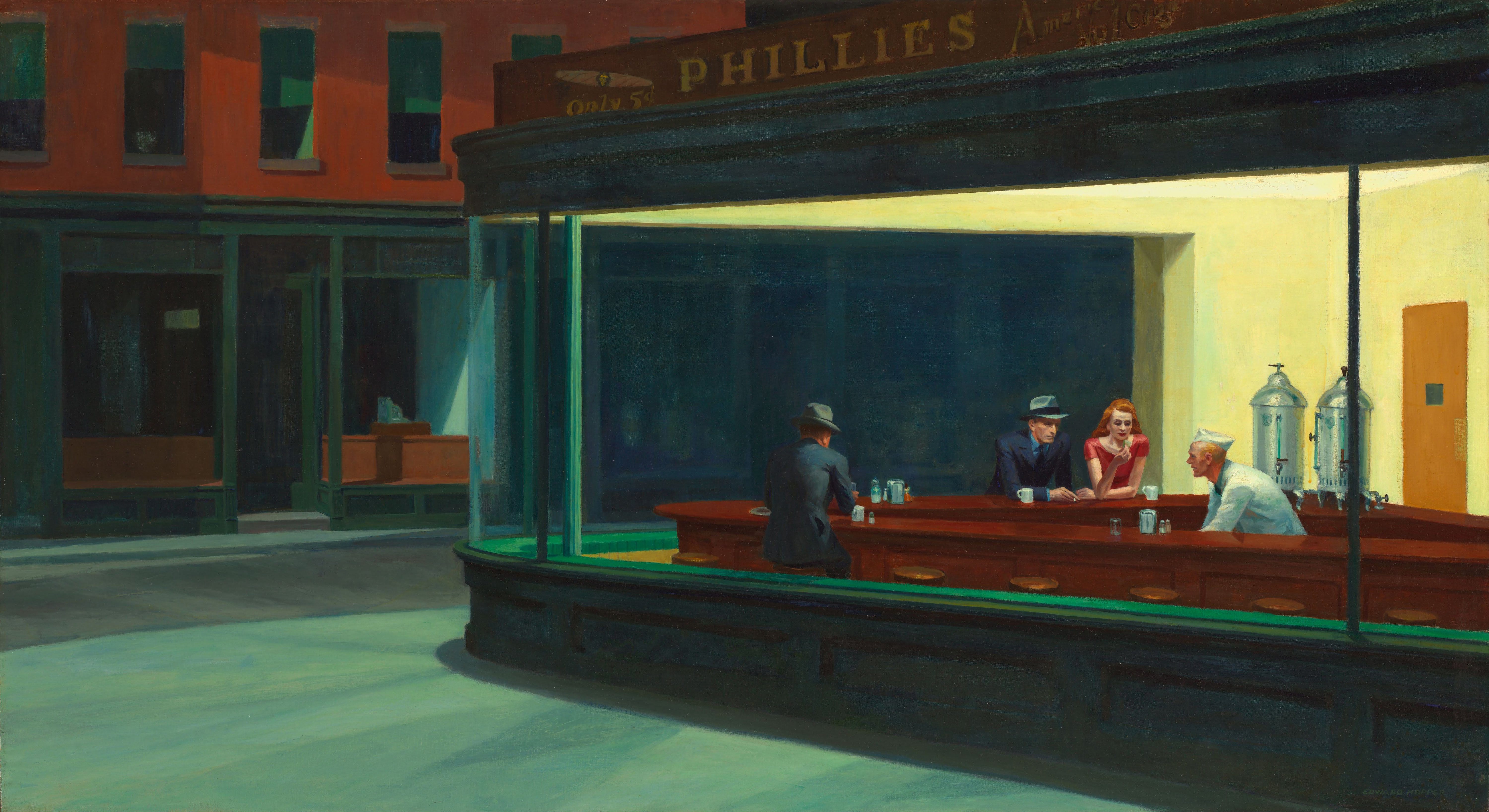
I can’t see much of the man sitting across from her—just an arm in a white button-down, a cuff link catching light, and the gold band on his ring finger.
Already I’m doing familiar math, shifting to see his face. It’s the same math I was always doing when we were together. The kind that began with a look or a comment and then follows you around for days, adding it all up, hoping somehow it comes out even.
A few weeks into the whole thing, she got tickets to Old Crow Medicine Show at the Saenger Theatre and insisted we go on a Monday night. You stood on the porch and waited for her to get home to the house she rented on Carol St.
Seeing her run across the yard, through the rain toward the front door.
Watching her shoes slide across the hardwood floor and hurry as she changed clothes in front of the washer and dryer and yelled “don’t look” in a way that caused you to question if she really meant it.
You go to dinner and the hostess seats you and she looks at the two of you and if she notices anything, she doesn’t give it away—she doesn’t look at you like some kind of mismatched couple. Or anything for that matter.
You’re standing there at the concert and she’s close to you. As close as she can be, really. And she touches you and moves back and forth with her arm inside yours—acting the way any interested person does.
But of course that’s not enough to solve anything.
Across the restaurant, she stands up from the table and moves toward the bathroom. Her husband looks as if he might stand as well and his face almost comes into view but the waiter steps in and I lose it.
I’m not sure it matters anyway. Why after all this time, seeing the man she’s decided on feels like some kind of answer, or like it might solve something.
Eventually the math became more complicated.
Days and nights that show you something.
The night she and her classmates met at the place off St. Charles to celebrate the end of their second year in law school. How she mentioned it to me, but I knew I’d have to work. And you sense maybe she prefers it that way.
How when the day came and turns out, you don’t have to work—how she seemed uneasy about the whole thing, saying “sure” in a way that makes you question if she really wants you to be there.
So, you park and walk in by yourself and the whole time you’re noticing little things—little things you’d be embarrassed to admit you notice, but you do notice. You see her over by the bar standing in a group of people. Twice as many men as women and she sees you and smiles gently but doesn’t rush over.
You add that piece and you tell yourself she must know the feeling of being in a place where everyone has something in common except for you. But maybe that’s not true.
Eventually she comes over and asks how your day was and the look on her face seems genuine so you subtract a little bit and tell yourself not to overthink it all.
You shake hands with her classmates and you can tell they’re also doing math. Recalculating the story they’ve been telling themselves about the type of guy she’d choose to be with.
You stand on the edge of conversations and spin your napkin-wrapped cocktail around and around until eventually some clean cut guy in loafers asks you what kind of work you do.
It really doesn’t matter what you say, and what you do say hangs in the air and you look at her and maybe she isn’t ashamed, but she isn’t exactly proud.
“Don’t feel like you have to stay,” she says eventually and you look around at the direction the night is going and you realize how many options she has. How if you left town, if you allow any space at all, how quickly she could fill it.
Over in the booth, the check arrives and the man whose face I still haven’t seen reaches for it. She takes the final sip from her glass of red wine, sets it down then rests her chin on the top of her hand the way she does when she’s really listening. He’s talking and she’s smiling and eventually she reaches across with her fork and cuts the dessert which sits between them.
The bartender takes my plate, then asks if I’ll have another Blantons. “Yes please,” I tell her “with ice.”
By the end of that summer, when you spent the weekend in Matagorda, both of you knew it wasn't going to work. You'd thought of every option by that point—the idea of long-distance, how she could finish law school and could take the Louisiana bar which has reciprocity in Wyoming.
You can rework the math in different ways, but neither of you really believe it.
So you go on like that pretending. Side by side for three days in beach chairs, not saying much and trying not to think about it.
You don’t think about it except for when she stands and walks toward the water and the sun catches her body and you remind yourself, all of it’s nearly over.
One of those days you come down from the room and you notice her by the pool, talking on the phone to someone, a girlfriend or maybe her mom. And somehow you know she is talking about it—talking to someone, doing the same calculation you are. Her future, what she wants, what she’ll do when she graduates—you can tell because of the way she pauses when she sees you and looks at you over her glasses in a way that says, “everything is just fine.”
And you won’t ask.
You don’t say anything until it’s late and you’ve both had a few drinks. You tell yourself you could stop all the adding and subtracting and lay the whole thing out on the table.
You organize a few words but by that time you're back at the hotel and she welcomes you in the dark and so you tell yourself you'll bring it up later.
And you're looking down at her and it's in those moments — perhaps it’s only in those moments — that the math stops. Maybe it does work after all. Maybe it adds up.
But of course that passes.
She turns away and falls asleep and you start again. Staring at the ceiling fan, watching it rotate.
I pick up my glass, take another sip and notice the way the ice hits the bottom and realize I’ve finished my third. Across the room, they both shuffle out and put on their jackets. She takes her phone from her pocket and stares down at it as they begin to move toward the front door.
I realize, once they make the turn by the host’s stand, there’s a chance she’ll see me. Then it will be her turn. Her chance to notice what she can—the suit I’m wearing and ask herself why I’m sitting here at this bar, alone.
But she doesn’t, she keeps moving, staring at her phone, not calculating anything or anybody, and I wonder if she ever has.
Maybe she’s had it balanced from the beginning.
The couple reaches the door and I hear the waitress call out from the booth. “Sir.”
The hostess catches them. “I believe you left your credit card.”
He turns and walks back to the table and I see him clearly for the first time.
I anticipate some type of clarity but there isn’t much. Nothing at all for that matter.
He looks like a guy, a regular guy at the end of a long day. Tie loose at the collar. More gray in his hair than I expected.
He thanks the waitress, takes the card, and walks back placing his hand at the small of her back as he opens the door.
I turn to see the bartender standing right in front of me. “Another Blanton’s, sir?” she asks.
I look back toward the booth, the empty wine glass and the receipt on the edge of the table.
“No, thank you,” I say. “Add it all up and I’ll settle my bill.”
I sign the receipt and as I stand I notice the couple at the end of the bar. A man in blue jeans and a ruffled sport coat next to a young woman in a black dress. She’s laughing at something he’s said.
I’m thankful to those who’ve taken the time to read these stories, essays, and interviews. After publishing my last story, Anhedonia, I heard from many of you via comments, text messages, and emails - offering encouragement and their own experience with the content. I’m grateful for each of those.
This week it occurred to me how much effort I put into unsubscribing from different online services—streamers, apps, etc. and the fact that at the end of every edition of the TRANSITION, I ask people to subscribe. While this work remains free of charge, you can support this project on a one time basis by clicking the button below. (The minimum allowable according to Substack.)
Just read your short story—you’re seriously talented Ben . Really enjoyed it. Sorry you missed Hail Mary weekend… we were basically throwing a Hail Mary all weekend—just going for it and hoping for a little snow magic.
These ghosts. I've been lucky to not have seen one. Very nice.