
TRANSITION INTERVIEW #23: Captain(Ret.) Brad Geary.
Thoughts on the current generation of service members, leadership in the face of risk, and the problem with the way our military often responds to tragedy.


Captain Brad Geary is a retired U.S. Navy SEAL officer whose career spanned more than two decades and included leadership at the highest levels of the force, command of multiple SEAL teams and training units, and ultimately as Commander of SEAL training. (Basic Training Command/BUDs)
In 2022, while in command of SEAL training, a candidate named Kyle Mullen died shortly after completing “Hell Week,” prompting a broad investigation into the program, the risks associated, and the level of medical oversight.
In the aftermath, Geary faced a series of inquiries and investigations that put his career, retirement, and SEAL Trident at risk. Those proceedings were ultimately dropped in 2024 in part because performance-enhancing drugs had been discovered in Mullen’s vehicle, a discovery that became central to understanding the tragedy.
In this interview we discuss the changes in culture and problem solving Brad witnessed during his time in service, retention, leadership in the face of risk, and the consequences produced by the way senior leaders respond to tragedy.
Thanks for your time, Brad. I don’t think we ever crossed paths in the Navy. My guess is that you were the Executive Officer(XO) at BUD/s not long after I left. In 2012.
That would make sense. I left the east coast in 2012. Not long after Extortion 17, I went to Basic Training Command/BUD/s for the first time - as the XO from 2012-2014.
So I bet we just missed each other.
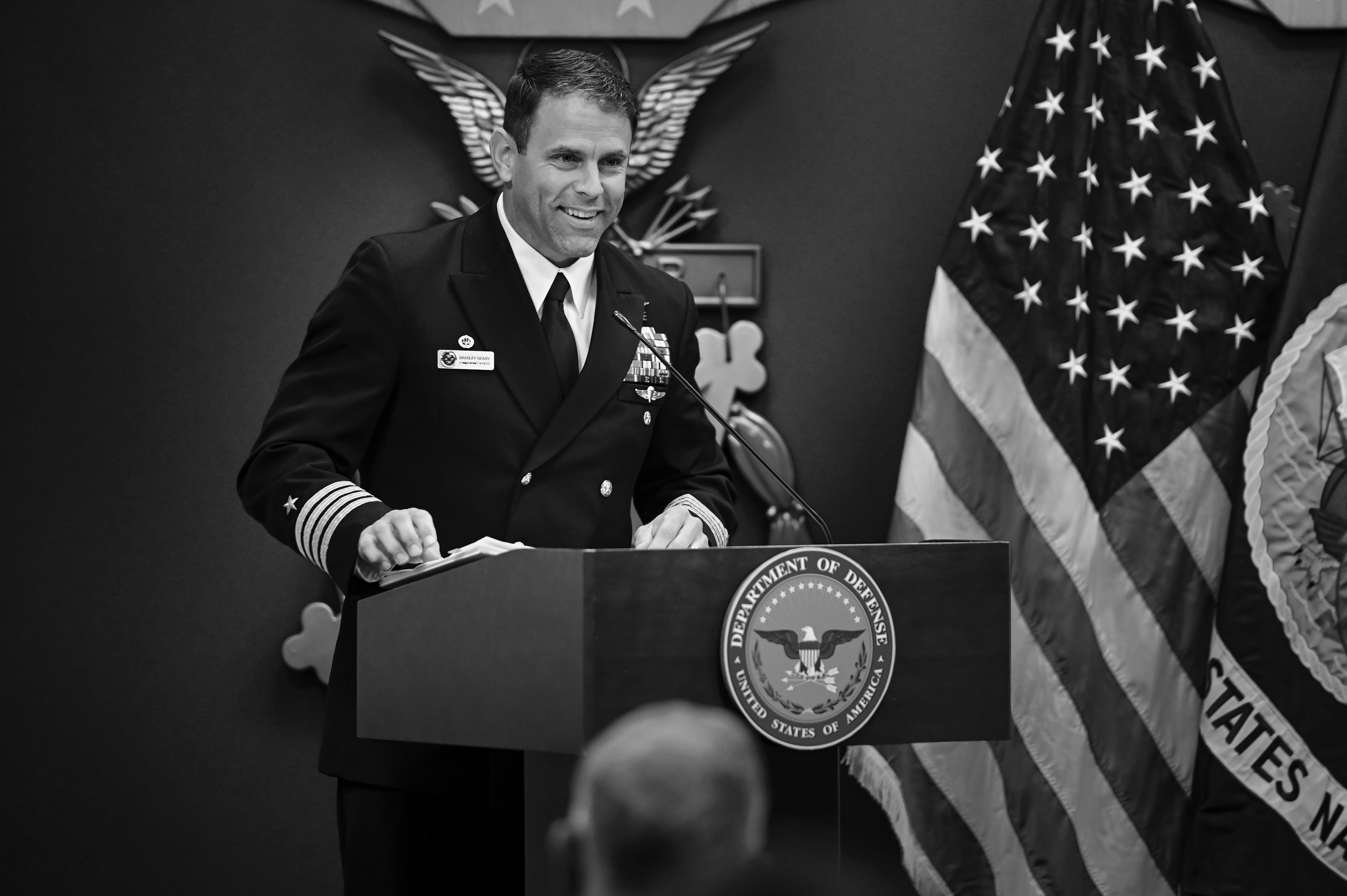
And eventually you come back to BUD/s as the Commanding Officer? Just recently?
That’s right, after I was XO I went to DC for Joint Interagency Task Force, then to SEAL Delivery Vehicle Team One as the Commanding Officer (CO). After that, I was offered a bonus CO tour, putting me back at BUD/s.
I’m sure you’re aware of what happened after that… But that’s sort of the second half of my career.
Given all that’s happened in the last two years, when you weigh all the good days and some of the tragic things you experienced - Extortion 17 for example - have you had the time and space to surmise the experience holistically?
Do you still view it as a good thing? Something you would recommend young men/women dedicate their lives to?
Yes, absolutely. Despite the way my career ended, being a Navy SEAL and a service member was a very rewarding experience overall.
If you look at just the BUD/s scenario, everything that happened, it was the most rewarding and the most costly tour of my career. That said, I would go back and do it again in a heartbeat.
I’ve told many leaders, many young officers, “When you’re in command at BUD/s, it is high-risk, but it’s worth it.”
The training takes individuals from the street and subjects them to some of the most rigorous military training in the world. There’s a lot of risk and a lot of fulfillment that comes with that. But, being able to shape the future of Naval Special Warfare’s (NSW) culture and metaphorically hand them the future of the SEAL teams… It’s amazing.
The SEAL teams are the best place in the world to work. I believe that. The culture, being around high-performers and people who are excited to come to work. The value system. The type of person who is always asking, “Am I carrying more weight for my teammates than they’re carrying for me?”
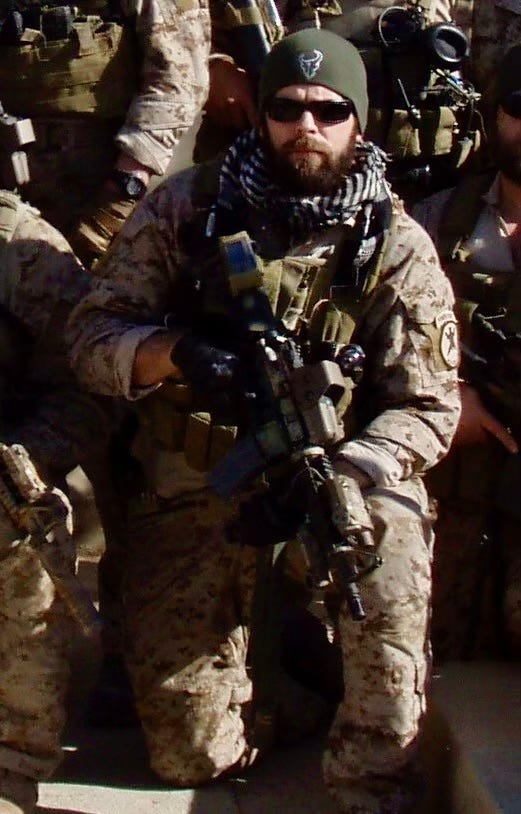
That’s rare, and it’s really a privilege to be a part of it.
Happy to hear that, and I think it is rare.
It can be intoxicating in a bad way.
I used to tell every graduating class, the SEAL teams are incredible, you’re going to immerse yourself in this job; HOWEVER, don’t make the mistake of letting it become your only sense of self-worth, your identity.
One day it ends.
Very few people are James Mattis, who spent an entire adult life in the military. In the end, the Navy is going to show you the door, and when that day comes, who are you going to be without the SEAL teams? Where’s your family? Where is your relationship with your kids? Play the long game and invest in them now.
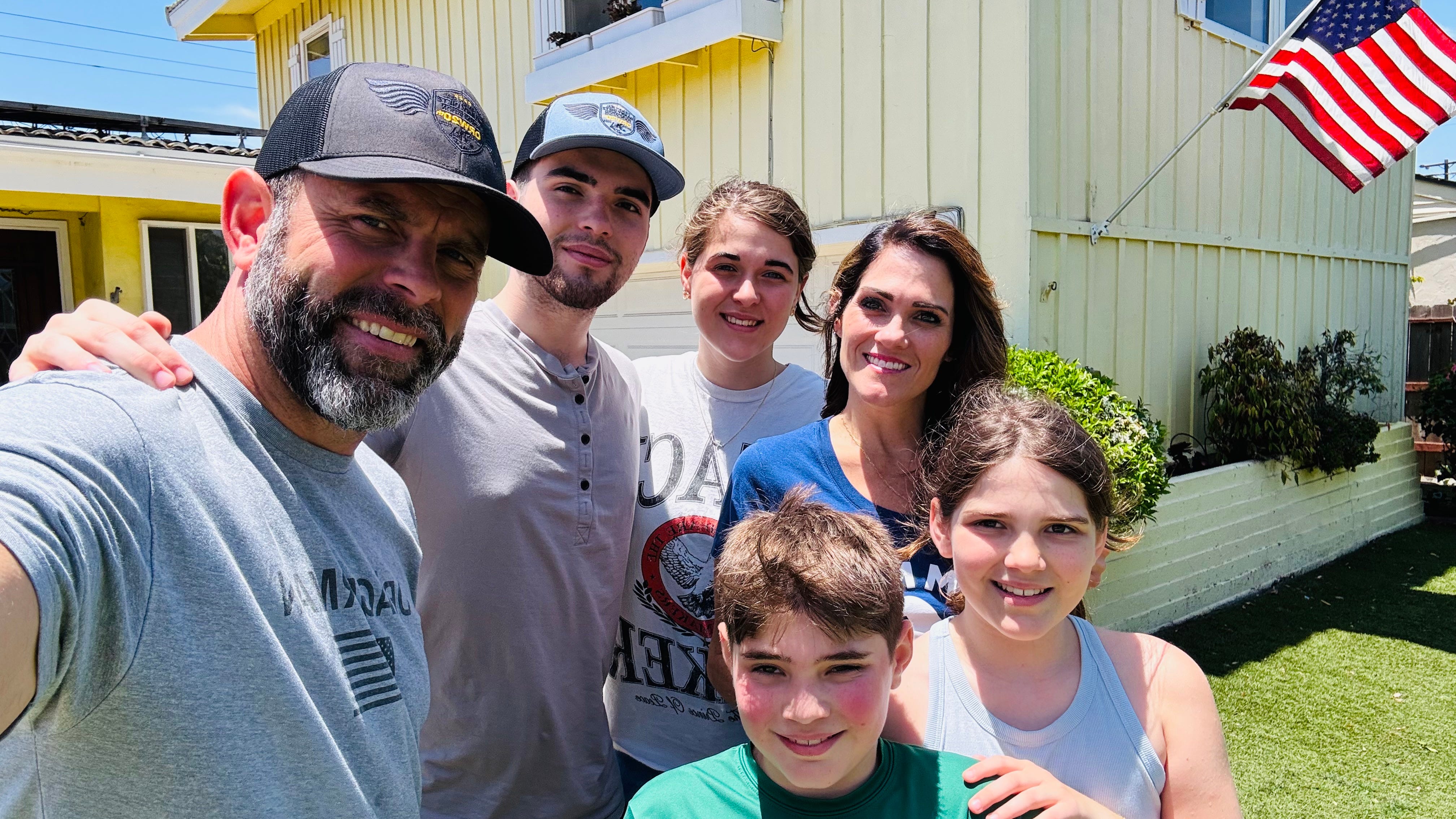
What kind of person can you be in the second half of your life?
I couldn’t agree more. There’s not a real need to answer questions like that when you’re a young person in the military. And that’s tough.
I think in the veteran space, we have many great resources that help with pragmatic TRANSITION - getting a job - but what you’re talking about is a lot harder to solve for.
When I was young in my career, I found myself on a flight from San Diego to Virginia Beach with someone who was a very high-ranking member of the SEAL teams. We got to talking, and he expressed concern with the popularity of the SEAL teams, its effect on the type of candidate coming into BUD/s, and the optionality these people have in life relative to fifteen years ago.
You look at your average BUD/s class, you’re likely to have extremely accomplished athletes, sons of politicians, and executives at Fortune 500 companies. That wasn’t the case pre 9/11 or prior to the Osama Bin Ladin raid, perhaps.
I’m curious to hear your thoughts on this. Seems you’re uniquely qualified to speak to this.
It’s a great question.
There was a time when the number of candidates with college degrees really increased. For whatever reason, as the brand became more popular, more college grads were enlisting.
And it’s true that the program today attracts people who have many options in life. However, I think we tend to focus on the wrong thing there.
The truth is that older candidates statistically perform better at BUD/s on average. College degree or not.
But what we really want to know is what happens down the line? What happens when these people with options are 8-10 years in — they’re getting married, they’re settling down, maybe having kids.
Are the teams providing me with opportunities? Do I have a ten-year plan? Am I still developing as a person?
This generation is smart enough to ask questions like that.
Money is a factor, but I don’t think it’s the biggest factor, or even close to.
Guys want to know, is this a meritocracy? Will I be rewarded for the investment I’m making here? As a SEAL, as a leader? And lastly, is the community investing in me so that when I get out, I’m able to succeed as a professional, as a father, as a husband?
All of that matters more than money, from what I observed.
We’ve moved away from some of the programs that I think really helped in many ways. Programs where you could get a degree from Harvard or UPenn – certain programs where the Navy was saying, “you’re investing in us, we’re investing in you.”
Do these young folks have many other opportunities in life? Sure. But they’re still the type of people willing to take less money for something that satisfies them as a person, as someone who serves their country.
I think that’s right. I also think combat plays a large role here. For better or worse.
Absolutely, it is. If that’s the primary driver, the main thing you want out of your career… Well, there’s no guarantee.
You know what else I’ll say, this generation, the classes graduating from BUD/s today are much more intolerant of bad leadership than my generation was. When I was a young guy, if you had a bad commander, a bad boss… You just dealt with it. There was an understanding that you win some and lose some.
We were guilty of allowing that in our community.
This generation has much less patience. They’re not willing to do back-to-back tours if they’re unimpressed by the leaders above them. I saw that firsthand.
That’s good. People, and certainly those in the special operations community, want to see their lives and abilities going up and to the right. If that wasn’t true, they wouldn’t be where they are. Plateaus and any stagnation can really turn people away.
You’ve witnessed two and a half decades of warfighters. What would you say are some of the attributes possessed by your own peer group that the current generation lacks, and vice versa? What is the youngest generation doing that previous generations could benefit from?
It’s important to talk about.
You know, my generation had this absolute resiliency and just unrelenting hardness. I believe that in the first half of the GWOT, we really showed resolve in finding the enemy, gaining the upper hand, and completing the mission in whatever way necessary.
For example, I recall a time when we used helicopters to get to every target. A few months into that, we are way too loud, we’re waking the enemy up, and essentially, we rarely found who we were looking for because that tactic was flawed in many ways.
Well, eventually someone says,“Why don’t we try something else?” So we did. We explored just about every option out there. In some cases, we hiked over the top of 10,000 ft mountains in the snow throughout the night just to sneak up to a target. The way my generation responded, was like, “Okay! Let’s do that.” No matter how difficult it was.
And there’s some value to that mindset, right? Well, what happened? Now we’re hiking over mountain ranges, through rivers — these hikes that would last all night long. Ten hours before you even get to the target. Very problematic.
So what effect did that have on the mission? A different one. We accomplished the intent, but often times the solution creates a new set of problems.
I sense that this current generation - is much more inclined to innovate and solve those new problems. They ask a lot more questions. They’re much more impatient when it comes to what they sense is wrong. Whether it’s moral or ethical, or tactical. This generation has much more courage when it comes to raising their hand and saying, “I actually disagree with that,” or “Hey, I think this is wrong.”
Some people take offense to that. Call it hubris, but I really don’t think that’s it. Done the right way, it’s high EQ, high moral courage, and it can save lives and add value to the mission.
That “roger that, sir!” mentality - it got the U.S. military a long way. It had its place, but I don’t think it’s applicable everywhere.
That’s interesting. I wonder how much it’s tied to what we were talking about before, the places in America that these people arrive from. Is that part of it?
I think so, but it’s not totally new.
I’ll tell you a story about a time when I was a young lieutenant and I had the opportunity to augment a Tier One unit.
I’ll never forget being in the briefing room and hearing these reconnaissance guys reject a mission because they’d done a risk assessment and come to find out, the mission was a bad idea.
That’s true professionalism, I remember thinking.
Rewind fifteen or twenty years, and it might be a rumor, but it’s a popular story: a young officer allegedly pushed back against the airfield seizure in Panama. Guy raises his hand and says, “Hey, if the objective is to stop Noriega’s aircraft, we can just blow it up from far away.”
They fired that guy.
“Negative, you’re going to walk across the airfield, cross open terrain, and assault the airplane.”
Well, you can look up what happened.
What do you hope to accomplish in your post-Navy life?
Oh man, I think a lot about this question.
First and foremost, I want to create a life where the past doesn’t define me. I can tell you I spent 25 years as a SEAL thinking about leadership, leadership style, and what it means to be a leader.
Strong leadership principles should transcend industry, and I’m excited to test that. I’m excited to continue to grow as a leader.
I want to establish roots at this point; I’d like to have a place to bring my kids back to. That’s one of the downsides of our lifestyle; we feel like sojourners, because we are. I think we did nine cross-country moves over the years, and my kids don’t really have a place they call home.
Whatever we do as a family, we want it to be God-glorifying and consistent with who we are.
I’ve spoken to officers from my own generation who are coming up on command-level leadership. One in particular I spoke with recently has only a few years until retirement - two or three young kids, and there’s a fear that when it comes to military leadership, success in recent years has everything to do with how many people get DUIs and arrested on the weekends and it has less to do with leadership acumen or ability.
That’s inconsistent with what their superiors were measured against when we were focused on Iraq and Afghanistan.
How do you think about terms like “total accountability” and this concept of people having their careers judged based on garrison-type events? When I think about this topic, I think your response to the death of Kyle Mullen is part of this.
I am very much a proponent of the idea of “Command.” But, before my case, I think I had a misguided and even unhealthy perspective about “The Commander is ultimately responsible. The buck stops with you.”
Yes, the CO is responsible.
But, the Navy has abused that concept and uses it inappropriately. The whole, “The CO goes down with the ship…”
I can’t tell you how many people said that to me during my case. But…my ship wasn’t sinking.
We’ve manipulated a good thing into something that allows the Navy, as an institution, to absolve itself from ever being at fault for anything.
These days the typical response from a Public Affairs Officer is, “Well, something happened and we relieved the CO for ‘lack of trust and confidence.’”
What does that tell you? It sends a message that it wasn’t an institutional problem; this is a single bad leader problem.
I heard this directly during my case. It’s much easier to say, “Captain Geary is a failure,” than it is to say, “Our institution created dangerous conditions and implemented bad policies, which we knew about. We tied our leaders’ hands, we ignored warning signs, and this is a problem we have to solve as a Navy.”
Instead, they say, “Captain Geary fucked up, and to fix the problem, we replaced him.”
But what message does that send to our young aspiring leaders? It disincentivizes the 12-yr officer who is weighing the pros and cons of staying around to compete for command leadership.
The second problem is that now, leaders are incentivized to spend all their time looking for and eliminating risk, which is a false notion and a fool’s errand. Risk will never be eliminated - it must be managed. But everything the military does these days is focused on reducing risk. Forget about developing people – making them the best they can be.
When that’s the mindset, as a Navy, we are going to spend 100% of our time just trying to stop something bad from happening.
Well, that’s not going to work in a wartime environment where it’s literally our job to make bad things happen. Inadvertently over time, we’ve created a culture that in peacetime directly contradicts what our wartime function is supposed to be. In other words, we’ve lost our way as an organization. Our stated values are incongruent with what behavior we actually incentivize and disincentivize.
I hadn’t thought of it that way. It is a way in which the highest levels of DoD leadership are likely exempt from any wrongdoing, ever.
It’s a pattern and it’s a problem.
It’s a problem we have to solve if we want the best young men and women in our country to raise their hand and lead in the warfighter industry.
You have to show young leaders that when they accept reasonable risk and they manage that risk, the Navy will have their back. And when that 1% scenario comes around and something terrible happens, we’re not going to hang you.
Did you feel bound and like your hands were tied as the CO of BUD/s?
100%. We asked for the authority to test for steroids for over decade. Right when I’d gotten there in 2012 as Executive Officer, there had been a recent steroid problem. People found out, some guys got kicked out; whatever. The problem goes away for a while, and you don’t hear about it, and then a few years later, what happens? It comes back.
Of course it does. If you look at the popularity of steroids in our country and you look at BUD/s training… It’s not at all crazy that the students may opt to use steroids to get an edge. And we also know how dangerous that can be.
We asked for authority to test for over a decade. Not only were we told “you can’t have the resources,” we were told, “you don’t have the right to test. You can’t go into someone’s bodily autonomy and look for these things.”
Now, if you had a reasonable suspicion, you could test a single individual. But it can’t be broad. Can’t be part of the program. This is what we were told.
We were told we couldn’t search vehicles, which is ultimately where the evidence was found in Kyle Mullen’s case.
There were other issues, for example, in the autopsy, Kyle’s heart measured 63% larger than it should have been.
And so, obviously, everyone wants to know, how did we miss this? How did this not show up somewhere in the multitude of screenings these guys are getting?
Well, come to find out if you look at Kyle’s physical from before BUD/s, there were clues, mentions of gynecomastia… Things that were never communicated to BUD/s. Things that put these sailors’ lives at risk.
And I’ll tell you that in the time since Kyle’s death, despite the many ways they came after me, they’ve invested a ton of money into cardiovascular imaging technology. You know how it goes, someone dies, and then all of a sudden, “Here’s all this money to start doing the right thing.” Having that has prevented numerous candidates from starting Hell Week - scenarios where this new technology has identified major heart defects and issues, whereas previously, they would have just proceeded with training.
The point is, many, many people at the ground level were speaking up about steroid use - how risky it is - and for the most part, those concerns were silenced.
Red tape and breakdowns in communication.
And following Kyle’s death, instead of saying, “The Navy made mistakes and we will never let this happen again.”
Instead, they said, “Brad Geary. We can tell people he was responsible.” Insiders admitted to me that in closed-door meetings at the Pentagon everyone acknowledged drugs were the primary cause of his death. But as soon as the doors opened, it was a hunt for accountability.
To be fair, they did finally allocate authority and resources to address the issue. We’re now increasing our medical screening technology. We’re testing the students more. But these were things we had been asking about for a long time.
I’ll ask you one more. Something which I think makes the SEAL teams, and the U.S. military great, is this idea that for most, what truly matters is when you look in the mirror, when you lie down at night, were you a worthy teammate?
When it comes to a high-stakes, high-consequence mission, do the guys to my left and right want me to be with them?
You led at a high level… In combat. We’ve just met, but I know some guys who worked for you, and they have nothing but great things to say. By many definitions, you did the job the right way.
When you were going through everything, congressmen and lawyers getting involved, going on the Shawn Ryan show - did it ever occur to you to give up? I know you’re not a quitter, but you could have just walked away, let it be, and moved on with your life.
I offered to.
When the whole thing started, even before the investigation and all the lies, I told my boss, “I get it. I’m in command, I knew what I was getting into. I love the Trident so much, I love the Teams, if we need a fall guy, I’ll do it.”
And the response was, “No, no, no, Brad. Don’t worry, everyone knows this was caused by drug use. This is difficult for everyone, but you’re going to be fine.”
Fast forward, and they began to lie about things. When they refused to take responsibility for this and acknowledge that drugs were a contributing factor, well…something or someone has to be responsible for his death. When the Navy dictated the evidence must be excluded… Okay, then what was it? Thus began the hunt for a scapegoat.
I had a problem with that, but generally, I was still willing to let the process unfold. I stayed silent for over a year while I watched the Navy continually bend its core values, and ultimately break them. Even at the expense of my own career. It wasn’t until I was charged with Captain’s Mast the second time that I was able to see the unredacted copies of the investigation, and then I saw the names of many of my guys - doctors, corpsmen, instructors - good people who served honorably that the Navy recommended be taken down with me. Alleging they were responsible for this person’s life. It just wasn’t true. It was a false narrative built upon the Navy’s failures…the Navy’s lies.
As their Commanding Officer, I was responsible for these people, just as much as I was responsible for Kyle. That’s when I told my wife, “We can’t just let this play out anymore. We can no longer afford to trust the process.”
That makes sense. Hard to hear.
It was heartbreaking. Kyle’s death, the way it all played out, it’s all awful. You know, the whole time, I never wanted to hurt the brand; I didn’t want any more negative attention on Kyle; I didn’t want any of it.
Around this time, I asked the Force Master Chief over to my house. We had whiskey in the backyard.
I showed him my cards, all the evidence I had, all the emails I’d received from insiders who sent me evidence of corruption. And I said, “Look, my lawyers are telling me this is a slam dunk case. Let’s not hurt Naval Special Warfare. We need to stop the lies.”
And I said, “Look, if this doesn’t stop, I have to take action. I refuse to stand by and trust that the Navy is going to do the right thing, especially when they’ve shown they are doing the wrong thing.” I told him, “I believe I have been ordained by God Almighty to take this stand at this place at this time. Does it sound like I will back down from these principles?”
He replied, “No.” So he leaves, tells me he’ll talk to the Admiral, and then nothing changed. They blew me off. I think they thought I would fade off in the background.
That’s when I took it to the House and Senate. Shortly after that, Shawn Ryan reached out. After hearing about the case, he prioritized me above everything else he had going on.
I eventually got access to additional emails and found one from our Admiral to the Secretary of the Navy or the CNO, which basically paraphrased said, “I think at this point we’ve taken this too far. I recommend we let Brad retire. This is not good for anyone.”
And the Navy blew that off also. Just ignored that advice. I’m not sure what they thought would happen. The Navy raised me as an Officer in accordance with “Honor, Courage, and Commitment.” Then, Naval Special Warfare trained me to fight. What did they think I would do? Did they really expect me to roll over and let them betray our core values in plain sight?”
Are the folks pushing this SEALs? Or is this the big Navy?
The politicization of the military and Senior Naval Officers are the villains in this story. Senior SEAL Offices were the ones who stood by and let it happen. They failed to have moral courage when it mattered most. I’ve never said their names publicly because that’s just not… I just don’t feel like that’s a good thing to do. The Navy deliberately demonized me with the public and NSW ducked boat and watched it happen. But…I won’t return evil for evil.
Even after we had support from dozens of Congressional Representatives and Senators, the Navy continued to come after me. That’s when I went back to the Senate and Shawn Ryan a second time. I had the unanimous blessing from my family. Basically, our position was, “We’ll take this as far as we have to.”
I want to get back to your comment about the guys to my left and right and those under my leadership. You’re absolutely right. That is what matters. That is what matters to me. And so while I did think it was worth fighting, I never lost sight of that. A lot of people under my command wrote letters and spoke up in support of me, and that gave me the power to fight from a position of, “Whatever comes of this, I’m comfortable with what I’ve done.” Their words…their testimonies, showed us they felt what I intended with my leadership philosophy. They felt my love for them.
Good for you. I really enjoyed this. I hope as you move on into your next life, the whole case, that whole part is just a chapter of life and not the first thing you think about when you remember your career.
I appreciate you saying that. Kyle Mullen, just like the SEAL Trident, it’s a foundational part of who I am today, but neither of them define me.
Thanks for having me. I appreciate your writing; you have a gift. I started following along a while ago. Thanks for having me.
 | A guest post by
|
Brad’s warning about not letting your work identity become your whole identity is wise. But one of the risks for people who find work that is a “calling” (which I assume is the case for many special forces members) is that by definition, their work becomes central to their being. I’ve worked with a number of people who lost their calling, and it was like a death with an extensive grief tail. I wrote about that which may be of some interest to you and your readers:
https://open.substack.com/pub/bairdbrightman/p/the-death-of-a-career?utm_campaign=post&utm_medium=web
Your writing gives me insight to a world that I don’t know. Thank you for the insight.